
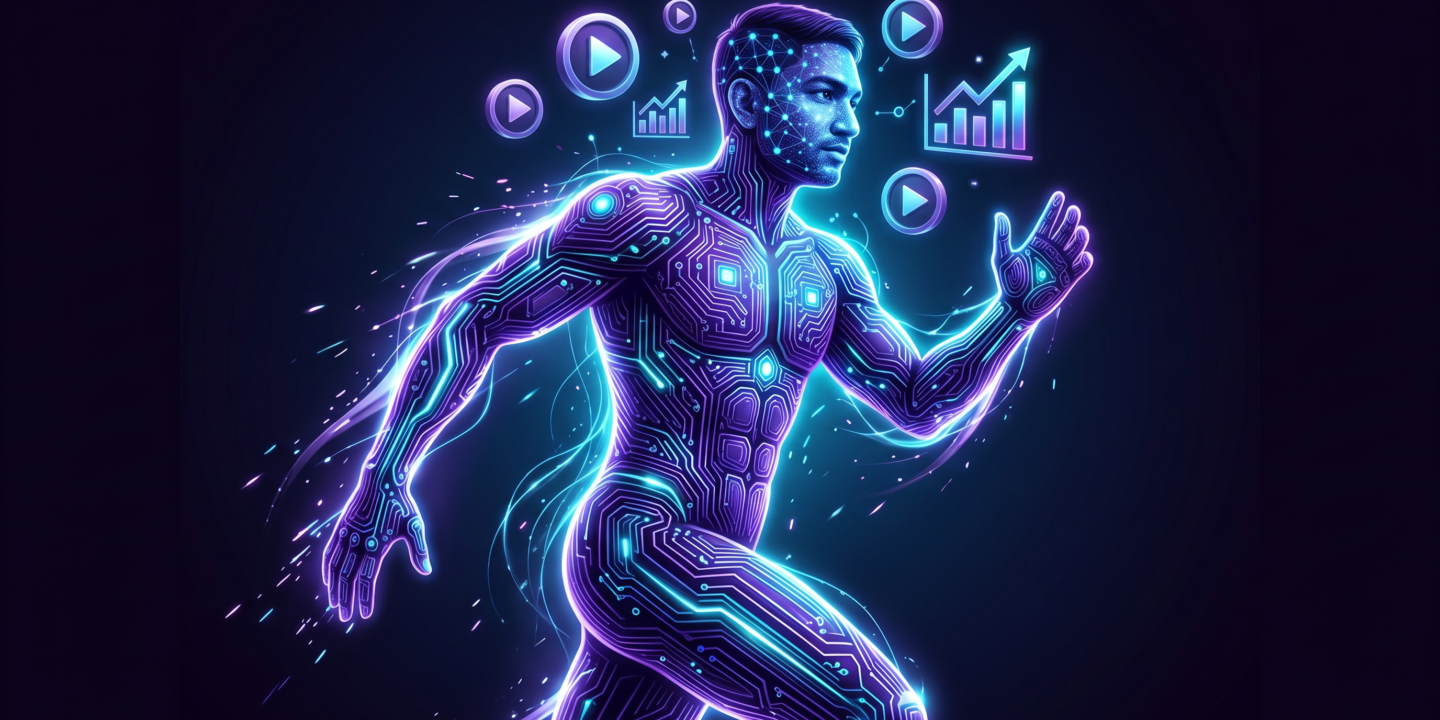
In an era of “information obesity,” the human brain has developed a sophisticated filter for static noise. By 2026, the global motion graphics market is projected to reach a staggering $98.3 billion, driven by a simple biological truth: our eyes are hardwired to track movement.
Motion graphics are no longer just an “add-on” to a marketing strategy; they are the primary language of digital communication. Here is why they are the future, and how you can master them.
1. The Science of Retention: Motion vs. Static
The shift toward motion isn’t just a trend; it’s a cognitive necessity. Research consistently shows that viewers retain 95% of a message when they watch it in a video, compared to only 10% when reading it in text.
- Multi-Sensory Engagement: Motion graphics combine visual storytelling with auditory cues, creating a “double-encoding” effect in the brain that strengthens memory.
- The “3-Second Rule”: In 2026, the average attention span for digital content has stabilized at roughly three seconds. Motion graphics use “Kinetic Typography” and fluid transitions to reset the viewer’s attention clock constantly.
2. Breaking the Complexity Barrier
One of the greatest challenges for B2B and Tech brands is explaining the “invisible.” Motion graphics act as a visual translator for abstract concepts.
- Simplifying the Complex: Whether it’s blockchain architecture or a SaaS workflow, animation can peel back layers in ways live-action cannot.
- Data Visualization: Static charts are dying. Dynamic Data—where infographics grow, shrink, and react in real-time—allows users to “feel” the scale of information.
3. The 2026 Trends: Authenticity & Sensory Design
As we move further into the decade, the aesthetic of motion graphics is shifting from “corporate polish” to what experts call “Imperfect by Design.”
- Tactile Textures: Influenced by 2026 design trends, we see a rise in “squishy,” “liquid glass,” and “organic” textures. Motion that looks like it can be touched drives higher engagement.
- AI-Augmented Creativity: Tools like real-time rendering and AI-driven animation are democratizing the field. Small brands can now produce Disney-level fluid motion without the Disney-level budget.
- Nostalgic Absurdism: Blending lo-fi “Notes App” aesthetics with high-end 3D elements creates a sense of “human” authenticity that resonates with Gen Z and Gen Alpha audiences.
4. SEO & GEO-Optimization: Driving High-Intent Traffic
To ensure this content reaches your target audience, we utilize Multimodal SEO:
- Dwell Time Mastery: Google’s algorithms in 2026 prioritize “Dwell Time.” Pages with motion graphics keep users engaged 2.6× longer than static pages, signaling high quality to search engines.
- GEO-Contextual Motion: Brands are now using “Localized Motion Assets”—small, animated elements that change based on the viewer’s geographic location (e.g., showing a local skyline in a background animation) to build immediate local authority.
Actionable Strategy for Brands
- Audit Your Static Assets: Identify your most-read blog post or most-used sales deck. Turn the “core realization” of that content into a 15-second motion loop.
- Invest in Soundscapes: Motion graphics are 50% visual and 50% audio. Use spatial audio to make your digital communication feel three-dimensional.
- Humanize the Motion: Even in abstract animation, include “human” imperfections—hand-drawn strokes or organic movement—to combat “AI-fatigue.”











No Comments